Solution Expert | Stock code:002630

To fully implement the official theme of this year’s Work Safety Month — Everyone Prioritizes Safety, Everyone Handles Emergencies: Identify and Rectify All Risks and Hidden Dangers — the company has launched a full range of activities of safety initiatives since June. These include safety training, emergency drills, warning education based on real accident cases, hazard screening, and interactive safety outreach, collectively reinforcing a robust safety barrier.
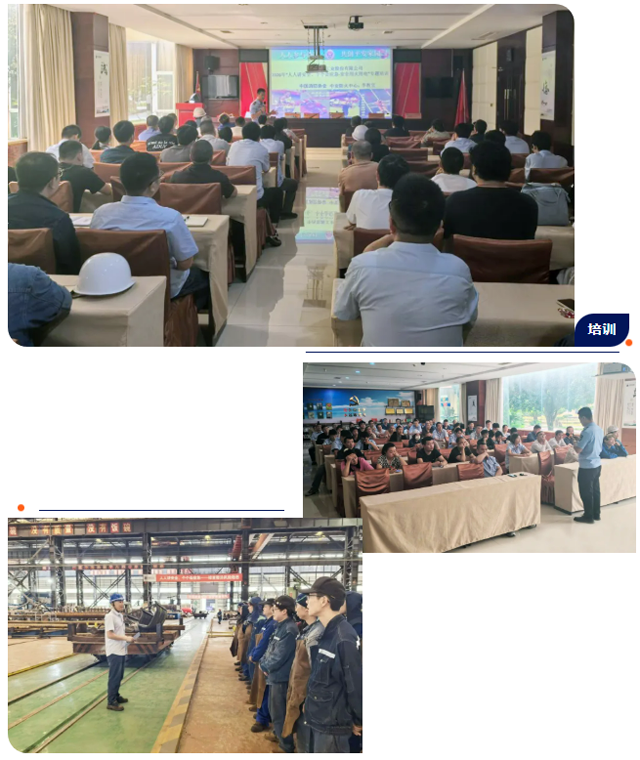
Full-Scale Production Underway, Safety Training Delivered to Frontline Staff
Production hit full swing in June, with furnaces running nonstop in the Equipment Manufacturing Workshop. Frontline technicians worked overtime to deliver key projects including Huadian Shantou Phase II, Datang Xiwangzhai and Xinjiang Huineng. The tighter the production schedule, the greater the focus on workplace safety. The company invited safety specialists to deliver on-site training tailored to different frontline trades in staggered sessions. Drawing on real accident cases, the experts analyzed the root causes of safety violations, explained standard operating procedures for tricky work processes, and shared hands-on emergency response skills. Meanwhile, two initiatives — Team Leaders Talk Safety and All Staff Share Safety Insights — were rolled out. Senior frontline staff elaborated on operational hazards while general workers voiced their safety concerns, ensuring safety accountability extends to every single workstation.
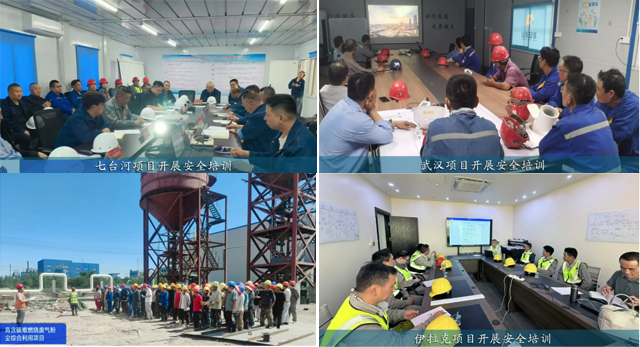
Build a Comprehensive Safety Protection System for Projects, Consolidate Safety Accountability Mechanisms
In compliance with special requirements for Work Safety Month, all project teams focused on core construction safety priorities. Particular attention was paid to high-risk operations including high-altitude work, hot work, confined space operations, and temporary power consumption. Key management priorities were closely monitored: on-site hazard screening and rectification, implementation of safety technical measures, standardized operation of workers, safety performance of subcontractors, and localized risk control for overseas projects, ensuring full and regular execution of all safety protocols.
Full-Scale Practical Drills, Forge Real Emergency Response Capabilities
The Water Wall Branch held fire emergency drills to standardize the full workflow of alarm activation, fire suppression and evacuation. The Heavy Pressure Vessel Branch simulated crane-related accidents to deliver hands-on training on casualty rescue, site control and hazard screening. The Serpentine Tube Branch organized radiation emergency drills to improve staff’s capacity for emergency evacuation and incident handling in case of radiation hazards. The Materials Management Department conducted drills covering first aid, equipment shutdown and area isolation targeting forklift injury risks. The Alkali Furnace Division regularly ran response drills for falling object accidents to boost frontline workers’ proficiency in handling sudden injuries.
Frontline construction teams carried out confined space operation drills and flood control emergency simulations. The full process, from emergency plan activation and hazard containment to post-incident disposal, served to test the teams’ rapid response capabilities. Through hands-on practical training, employees have become familiar with response protocols and mastered risk avoidance skills, cultivating a proficient emergency response workforce.
Carry Out Rectification Through Inspections to Eliminate Hidden Dangers; Implement Dynamic Zero-Hazard Management to Secure Workplace Safety
Upholding the principle of "rectify risks through inspections and eliminate hidden dangers", inspection teams conducted comprehensive grid-style safety audits across workshops. Machinery, fire-fighting equipment and special equipment were checked item by item to crack down on malfunctions in running equipment, blocked fire exits and non-standard use of special equipment. All identified hazards were filed with designated persons in charge, rectification plans and deadlines, forming a closed-loop management system covering hazard identification through rectification completion and clearance.
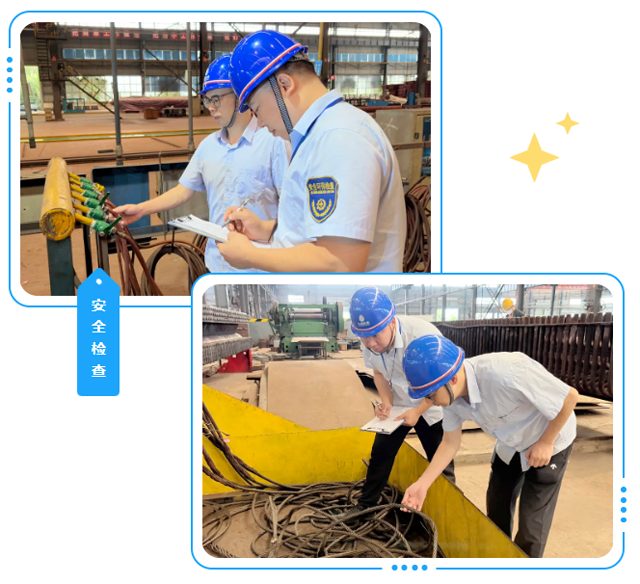
A full safety audit was conducted at CWPC Comprehensive Bonded Project, covering standard factory buildings, comprehensive service buildings, emergency facilities and electrical safety.
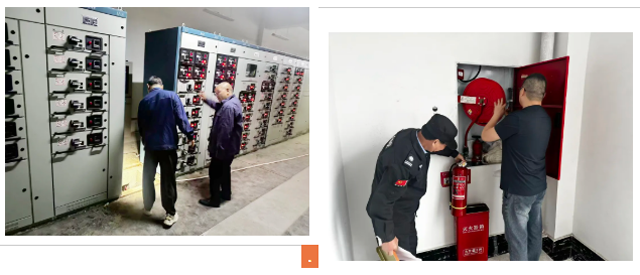
In preparation for the upcoming high-temperature and flood season overlapping risks, all departments carried out flood risk identification and hazard screening, thoroughly checking lightning protection, anti-static and other facilities to prevent safety incidents triggered by natural disasters and complete closed-loop risk management.
Intensive training during Work Safety Month consolidated safety barriers and fueled corporate development. Taking this Work Safety Month as an opportunity, the company further entrenched the mindset of Everyone Prioritizes Safety, Everyone Handles Emergencies. Regular safety training was deeply rooted in employees’ minds, hazard screening maintained dynamic zero-hazard management, and emergency drills remained practical and effective. Safety management was advanced in depth and detail, with stricter standards and more concrete measures to build a robust safety barrier supporting stable corporate development and smooth project delivery.
Operation Headquarter
No.66, Rongchuan Road,
High-tech Industrial Zone ,
Zigong, Sichuan Province
Tel.:+86-813-6666666
Fax:+86-813-4732222
Post Code:643001
Operation Headquarter
F25、26,Jiarun International Financial Center,
No.17 Jiaozi South 1stRoad,
Chengdu 610000,Sichuan Province,P.R.China
Tel.:+86-28-81531310
Fax:+86-28-81531310
Post Code:610100
Operation Headquarter
No.17, Wenlv Mansion,
1st South Jiaozi Street One South,
Nanyi Street,Chengdu ,
Sichuan Province
Tel.:+86-28-81531310
Fax:+86-28-81531310
Post Code:610041

Please follow us on Wechat.