Solution Expert | Stock code:002630

Amid the accelerating global energy transition, coal-fired power generation has both fueled industrial development and drawn scrutiny due to environmental challenges. Now standing at the crossroads of energy transformation, its future hinges on clean and efficient technological upgrades, synergistic coexistence with new energy sources, and intelligent innovation. Guided by this vision, CWPC is committed to delivering sustainable energy solutions for its clients. Through independent R&D and international collaboration, the company continuously optimizes the energy efficiency and environmental performance of its pulverized coal boilers. These innovations provide reliable support for energy projects across Asia, Africa, and Latin America, driving balanced development that harmonizes economic benefits with environmental responsibility.
I. Proven Technology, Global Track Record
CWPC's pulverized coal boilers span capacities from 300t/h to 1223t/h, covering pressure classes including. Hundreds of units have been successfully commissioned across China, Southeast Asia, India, Tajikistan, and beyond. With dozens of patented technologies and years of operational refinement, the systems deliver exceptional stability and reliability, making them the preferred choice for numerous energy projects.
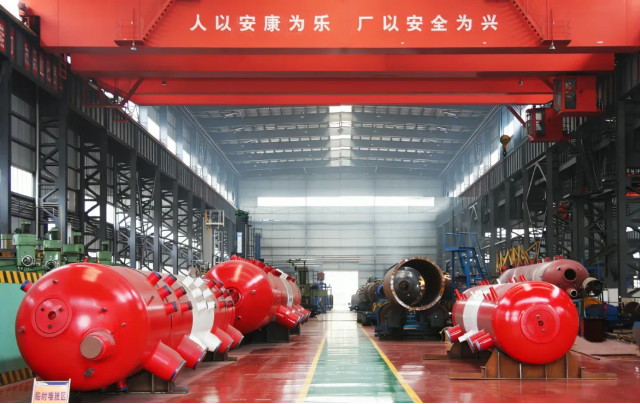
II. High Efficiency and Energy Savings, Significantly Reduced Operating Cost
Precise flue gas temperature control: Minimizes flue gas temperature while maintaining levels above the acid dew point, reducing heat loss.
Extended Combustion Residence Time: Furnace design ensures 2.5 seconds of coal powder residence time, enhancing combustion efficiency and reducing mechanical incomplete combustion losses.
Horizontal rich-lean combustion technology: Separates rich and lean combustion zones to enhance ignition and combustion stability. Combined with staged combustion, it achieves highly efficient and clean combustion.
Optimized Insulation System: Carefully selected materials and calculated thicknesses minimize heat loss.
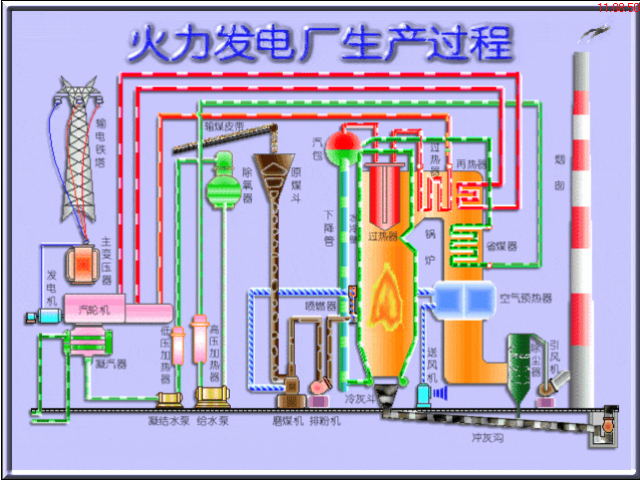
III. Safe, Reliable, and Long-Term Stable Operation
Scientific Thermal Load Design: Optimized furnace dimensions and thermal load parameters based on coal characteristics prevent coking and overheating.
Anti-wear and Corrosion Measures: Enameled materials are used in the low-temperature section of the air preheater, with reasonable control of flue gas velocity and temperature. Anti-wear structures are installed on critical heat transfer surfaces.
Material and Structural Redundancy Design: Generous wall thickness allowances for heat transfer surfaces accommodate load and coal quality fluctuations, eliminating tube burst risks.
IV. Ultra-low emissions, leading environmental compliance
Burners employ staged combustion technology, dividing the combustion zone into a reduction combustion zone and an over-oxygen combustion zone. The reduction combustion zone achieves stable high-temperature combustion and long-term complete combustion, simultaneously controlling Nox generation through oxygen concentration and temperature to ensure low Nox emissions. Lower furnace thermal load parameters are selected, with optimized air distribution to organize the aerodynamic field.
V. Flexible Fueling: Truly Turning Waste into Treasure
Capable of burning various coal types including anthracite, bituminous coal, lignite, and lean coal. Can also co-burn industrial byproducts such as blast furnace gas, coke oven gas, and chemical waste gas, achieving comprehensive resource utilization and promoting a circular economy.
VI. Wide Adjustment Range for Diverse Operational Needs
Load adjustment range spans 50%–100%, maintaining rated steam parameters between 70%–100% load. Optimized burner design significantly enhances variable load adaptability.
VII. Stable and Robust Combustion, Worry-Free Low-Load Operation
Employs the latest low-Nox horizontal rich-lean combustion technology developed in collaboration with Harbin Institute of Technology, implementing horizontal rich-lean deviation combustion. The rich coal powder stream is injected into the furnace from the fire-facing side, directly encountering high-temperature flue gas. This initial contact provides greater ignition energy, enabling rapid ignition and stable combustion of high-concentration coal powder. The lean stream operates at the periphery of the flame vortex zone, where lower combustion temperatures minimize coal particle adhesion to furnace walls.
Features an adjustable peripheral airflow offset. The peripheral airflow is controlled by a dedicated damper, allowing adjustment based on coal quality and load conditions. At low loads, the peripheral airflow damper can be reduced or even closed to achieve stable combustion at low loads.
The top secondary air adopts a reverse-cut configuration. This increases the velocity decay ratio of coal particles after entering the furnace. As the coal particles enter the upstream counter-flow air stream, their upward velocity and direction are altered, which is highly beneficial for stable combustion and enhanced combustion efficiency.
VIII. Clean System Design and Simplified Maintenance
Optimized flue gas velocity across heat transfer surfaces and comprehensive soot blower configuration effectively prevent ash accumulation. Wear protection devices installed at critical points extend system lifespan and reduce operational costs.
A World Record Achievement
Indonesia Guohua Muyin Coal-Fired Power Project (2×150MW)
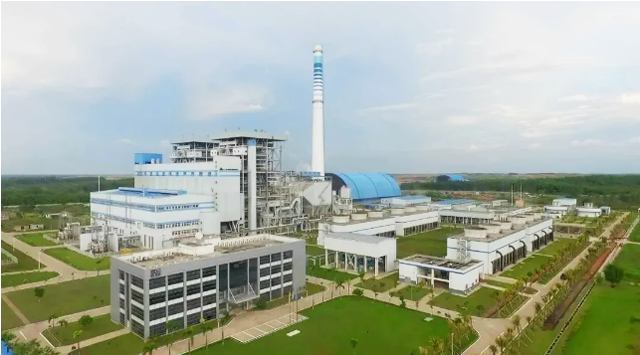
CWPC's pulverized coal boilers for this plant innovatively employ "primary air preheater flue gas drawn from the economizer inlet" technology, successfully overcoming the challenge of burning high-moisture lignite. The unit achieved 1,438 consecutive days of safe operation, surpassing the previous record of 1,073 days held by an Australian company and earning the "World Record for Longest Continuous Operation of a Coal-Fired Unit."
Xinjiang Hesheng Silicon Industry Supercritical Units (2×350MW)
With a boiler evaporation capacity of 1200 t/h, main steam pressure of 25.4 MPa, and temperature of 571°C, all indicators during trial operation exceeded design specifications. Power generation coal consumption decreased by 15–20 g/kWh compared to subcritical units, while unit efficiency increased by 3–4%. This marks CWPC's formal entry into the advanced supercritical technology arena.
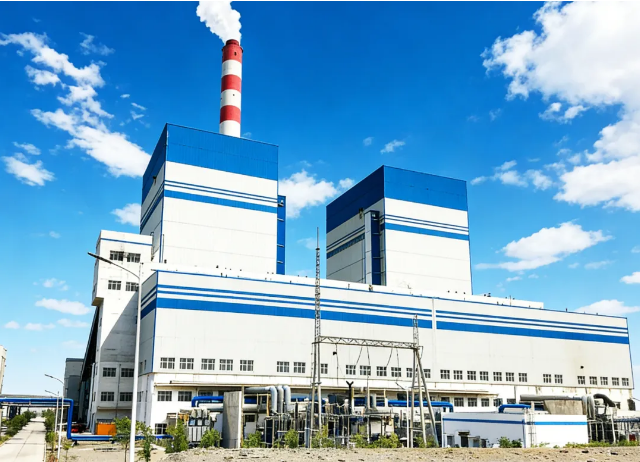
CWPC safeguards blue skies with technology and empowers the future with efficiency. We stand ready to collaborate with global partners in advancing clean and efficient energy utilization, injecting enduring momentum into sustainable development.
Operation Headquarter
No.66, Rongchuan Road,
High-tech Industrial Zone ,
Zigong, Sichuan Province
Tel.:+86-813-6666666
Fax:+86-813-4732222
Post Code:643001
Operation Headquarter
F25、26,Jiarun International Financial Center,
No.17 Jiaozi South 1stRoad,
Chengdu 610000,Sichuan Province,P.R.China
Tel.:+86-28-81531310
Fax:+86-28-81531310
Post Code:610100
Operation Headquarter
No.17, Wenlv Mansion,
1st South Jiaozi Street One South,
Nanyi Street,Chengdu ,
Sichuan Province
Tel.:+86-28-81531310
Fax:+86-28-81531310
Post Code:610041

Please follow us on Wechat.